

New York Stock Market Rises Amid AI Rally, Key Variables are Middle East and Interest Rates
By ATTN Desk · Editorial oversight: Sean Han
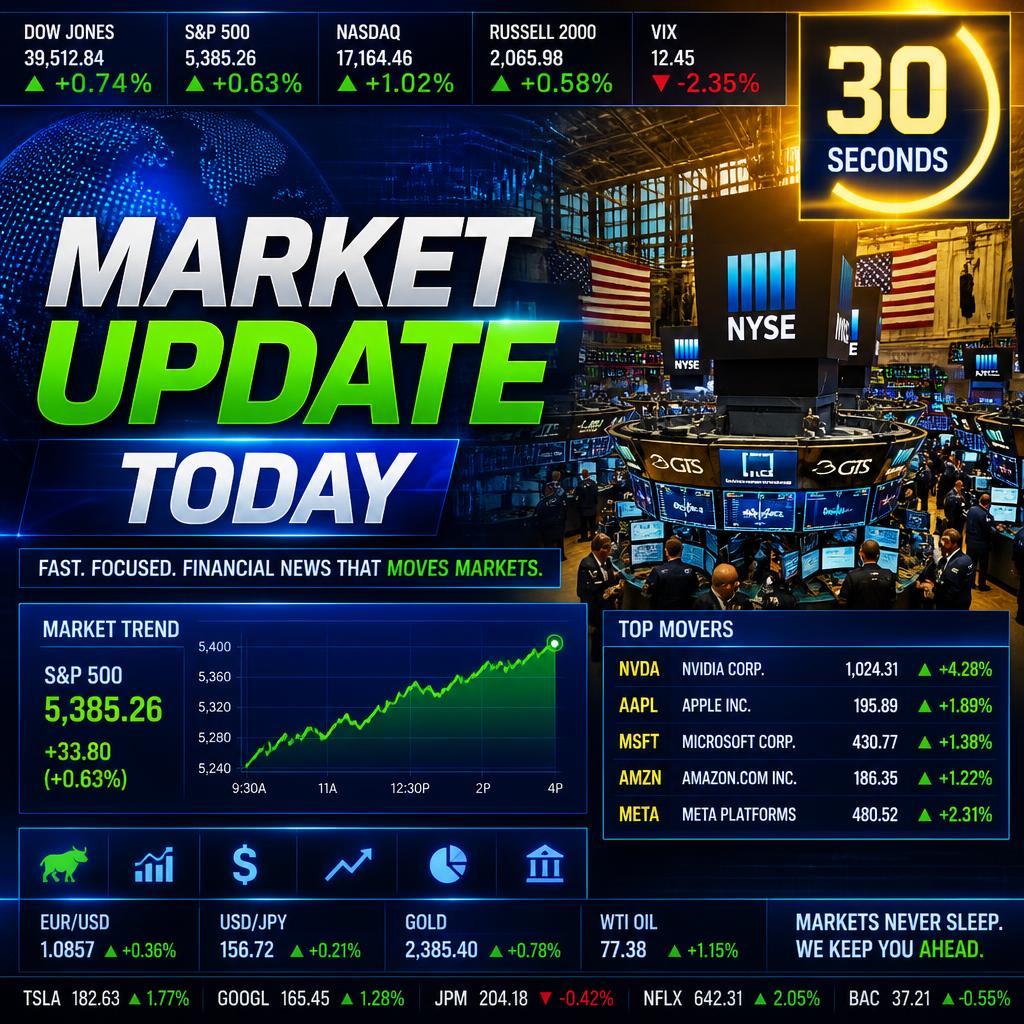
On Friday local time (early morning on the 11th in Korea), New York markets closed slightly higher, buoyed by strength in artificial intelligence (AI)–beneficiary stocks. The S&P 500 rose 0.4% to 7,575.39, the Dow Jones Industrial Average climbed 0.3% to 52,637.01, and the Nasdaq gained 0.3% to close at 26,281.61, extending its winning streak to four of the past five weeks.
What drove markets more than macro indicators were AI developments and Middle East variables. SK hynix, making its Nasdaq debut with an IPO price of $149 and raising approximately $26.5 billion, surged 13.1% on its first trading day, while Nvidia’s 4% gain led the S&P 500’s advance. Conversely, the Russell 2000 small-cap index fell 0.5%, suggesting investors remain cautious about extending gains across all risk assets.
On the global front, the risk of war with Iran and tensions in the Strait of Hormuz remain key concerns. Still, Brent crude fell 0.4% to $76.01 per barrel, relinquishing some gains made after President Trump’s comments on “ending the truce.” The U.S. further pressed Iran to publicly guarantee reopening the strait and halting attacks on commercial ships, and markets are pricing in a scenario where “a full-scale conflict is unlikely but the potential for another oil price surge persists.”
Corporate news also swayed sentiment. WD-40 posted stronger-than-expected results, sending its shares up 10.6%, while Delta Air Lines fell 1.8% despite solid earnings, weighed down by its year-to-date rally. Stablecoin issuer Circle climbed 5% on news of bank charter approval, highlighting the convergence of digital assets and traditional finance. With major banks kicking off earnings season next week, whether “real profits” can justify AI-driven optimism is likely to determine the market’s next move.
On the policy front, there were no Federal Reserve events, but the 10-year Treasury yield edged up to 4.56% from 4.54% the previous day. Minutes released this week from the Federal Open Market Committee (FOMC) revealed disagreements among members over the inflation outlook, yet a majority scenario of keeping the year-end policy rate around the current 3.6% level—or trimming it slightly—reaffirmed the Fed’s commitment to its 2% inflation target. The Fed also announced the launch of a task force—including outside experts like Mark Andreessen and Raj Chetty—to review its $6.7 trillion balance-sheet reduction and monetary policy operations, signaling the potential for structurally tighter liquidity over the medium to long term.
For investors, it’s time to adopt a holistic strategy that looks beyond the short-term AI rally to gauge the risk of renewed Middle East geopolitical tensions, shifts in the Fed’s inflation outlook, and the extent to which upcoming earnings can deliver real profits.